
The Prosecco Hills. Forty minutes from your door.
There are places that look exactly like you hoped they would. The Prosecco Hills are one of them.
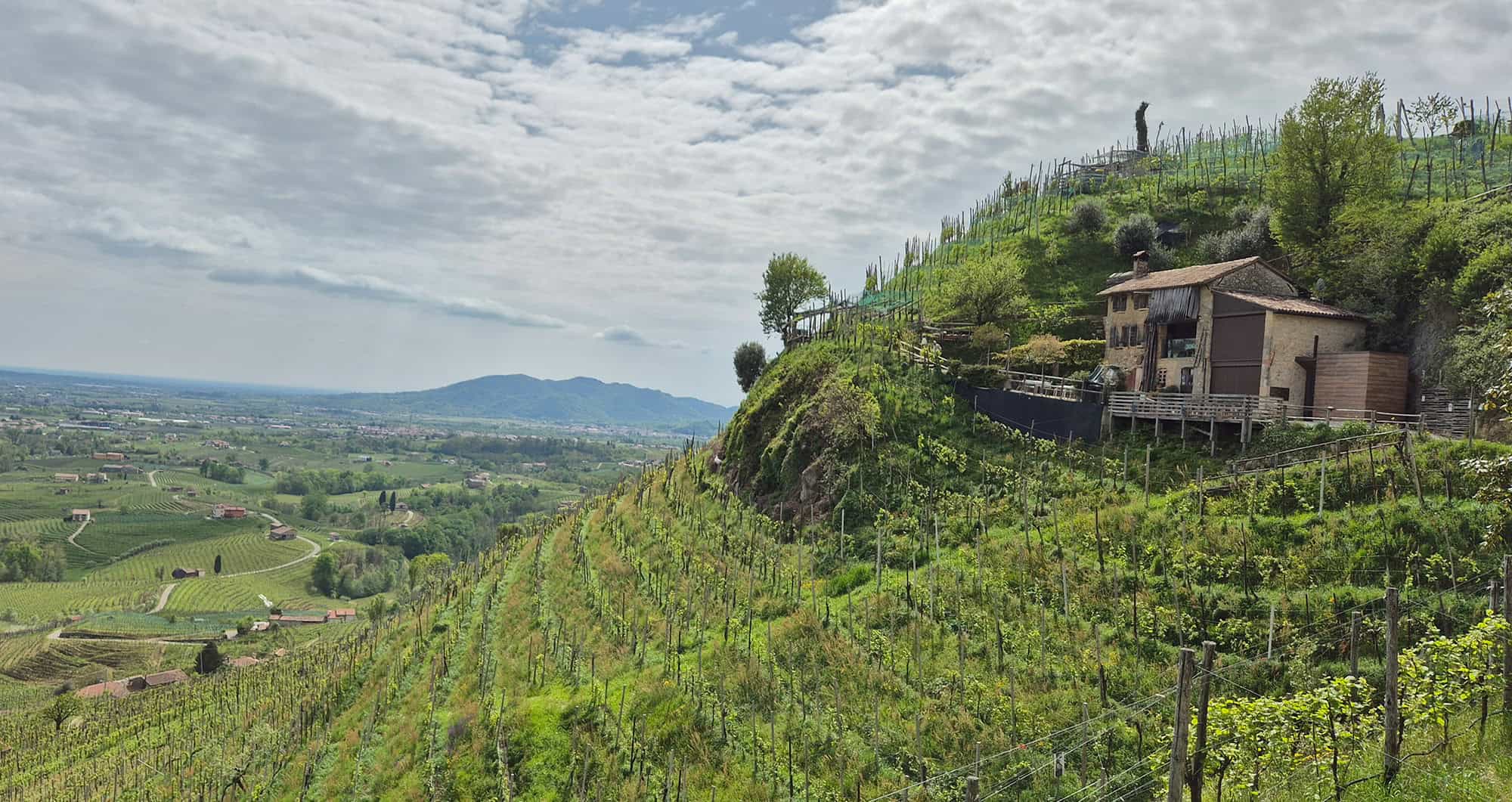
North of Treviso, the flat Veneto plain begins to rise. Gradually at first, then more decisively — until you find yourself among steep green hillsides covered in vines, small roads that curl between them, and villages that seem to exist at a different pace from the rest of the world. In 2019, UNESCO made it official: this landscape, the Conegliano Valdobbiadene wine region, is a World Heritage Site. Anyone who has driven through it on a clear morning already knew why.
What grows here
Prosecco is made from the Glera grape, and the Glera grape grows best on these particular hillsides, in this particular soil, with this particular combination of Alpine air and Adriatic warmth. The result is a wine that is lighter and more delicate than the versions produced elsewhere — fresher, with a finesse that has very little to do with the prosecco that ends up in supermarkets the world over.
The best way to understand the difference is to taste it here, poured by someone who grew the grapes themselves.
What to do
The hills reward slowness. Drive the small roads between Conegliano and Valdobbiadene — the Strada del Prosecco, Italy’s oldest designated wine route — and stop when something catches your eye. A cantina with an open gate. A viewpoint that seems too good to be accidental. A village square with a single bar and nowhere in particular to be.
Many small producers welcome visitors for tastings, often with very little formality and a great deal of generosity. These are family operations, in many cases — the kind of places where the person pouring your glass also picked the grapes.
If you go on a weekend, the hillside restaurants fill up with local families doing exactly what you are doing: eating well, drinking slowly, and not rushing back.
When to go
Any season has its argument. Spring brings the vines back to life — the hillsides turn a vivid green almost overnight. Summer is warm and abundant. Autumn is the most dramatic: harvest season, when the hills are in full colour and the air smells of fermenting grapes, is one of the great sensory experiences of northern Italy. Even winter has its quiet appeal — the mist settles in the valleys, the villages empty out, and the landscape turns monochrome and beautiful in a completely different way.
Getting there from Treviso
By car, the hills are forty minutes away — less, on a good day. The drive itself is part of the experience. By the time you arrive, you’ve already passed through enough of the Veneto countryside to understand something about why the wine tastes the way it does.
Come back with a few bottles. You’ll know exactly where they came from.